Rose Angel: Where Bold Strokes Meet Delicate Elegance
There’s a moment in every design project when you realize the typeface you’ve chosen isn’t just carrying words—it’s carrying the entire mood. I remember working on a boutique candle brand’s packaging last fall. We’d settled on earthy tones and minimalist layouts, but something felt off. The serif we’d picked felt too corporate, the script too casual. Then we tried Rose Angel, and everything clicked. That perfect tension between its bold serifs and whisper-thin strokes gave the brand a voice that felt both luxurious and approachable. It’s that kind of font—one that doesn’t just sit on a page but actively shapes how people perceive your work.
The Anatomy of a Serif That Balances Strength and Grace
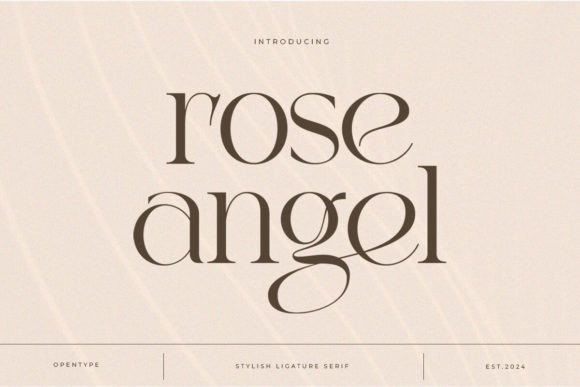
What makes Rose Angel stand out in a sea of premium fonts? It starts with its construction. Each character is built on a foundation of contrast—thick vertical strokes that give it presence, paired with hairline details that add delicacy. The serifs themselves aren’t just decorative; they provide visual anchoring, making the font feel stable even when used at larger display sizes. But where Rose Angel truly shines is in its ligatures and swash alternates. Those elegant connections between letters—like the seamless flow from ‘f’ to ‘i’ or the flourish on a capital ‘R’—aren’t just ornamental. They create a natural rhythm that guides the eye across a line of text, making everything from headlines to body copy feel more cohesive.
I’ve used it for everything from wedding invitations to tech startup logos, and it consistently delivers that “premium” feel without trying too hard. The font includes multiple weights and styles, which means you can maintain visual consistency across an entire brand system—from a bold, commanding logo to delicate, readable subheadings on a website.
Practical Applications That Actually Work
Let’s get specific. Where does a font like Rose Angel actually make a difference? For small business owners crafting their brand identity, it’s a versatile tool. Imagine using it for your logo, then carrying that same typeface into your packaging, business cards, and social media templates. Suddenly, your brand looks intentionally designed, not cobbled together. The font’s elegance lends itself well to luxury goods, artisan products, beauty brands, and boutique services—but its readability ensures it doesn’t sacrifice function for style.
For content creators and marketers, Rose Angel can elevate your visual assets without requiring a design overhaul. Use it for quote graphics on Instagram, for the title slide of a webinar, or for the header of your email newsletter. Its stylish ligatures add a touch of sophistication that helps your content stand out in a crowded feed. I’ve seen bloggers use it effectively for chapter headings in digital guides or for pull quotes in long-form articles, adding visual interest that keeps readers engaged.
In print, it’s equally at home. Think wedding stationery, event posters, restaurant menus, or editorial layouts for magazines. The font’s contrast ensures it remains legible even when printed at smaller sizes, while its character makes larger headlines feel dynamic. One client used Rose Angel for a series of limited-edition product labels, and the font’s subtle details became a talking point—customers actually commented on how “elegant” the packaging looked.
Pairing and Readability: Getting the Most from Your Font
A beautiful font can still fail if it’s used poorly. With Rose Angel, I recommend thinking carefully about pairings. Because it has such a distinct personality, it often works best alongside simpler, more neutral typefaces. Try pairing it with a clean sans serif for body text on websites or in brochures—this creates hierarchy without visual competition. For example, Rose Angel for headings and a font like Open Sans or Lato for paragraphs lets the serif’s elegance shine while maintaining readability.
Readability is key, especially for digital use. While Rose Angel’s thinner strokes are beautiful, they can lose clarity on low-resolution screens or at very small sizes. Test it at the actual size you’ll use. For web design, consider using it primarily for headers, logos, or featured text rather than entire paragraphs of body copy. For print, you have more flexibility, but always request a proof to ensure the ink doesn’t overwhelm those delicate lines.
Another practical tip: explore the font’s full character set. Many designers only use the basic letters, but Rose Angel’s swash alternates and ligatures can add unexpected flair. Use them sparingly—a flourish on a single initial or a ligature in a headline can make a design feel custom and thoughtful.
Choosing the Right Style for Your Project
Rose Angel typically comes with multiple styles—regular, bold, italic, and sometimes condensed or extended versions. Each serves a different purpose. The bold weight is excellent for headlines or logo text where you need impact. The regular weight is versatile for shorter text blocks. Italics can add emphasis or a softer tone. Before you start designing, review all the included styles and consider which ones align with your project’s goals.
If you’re building a brand, think about how the font will scale across different media. Will it work on a tiny favicon as well as a large banner? Test it. Will it remain legible on a mobile screen? Check. The best typography feels effortless to the audience, but that requires careful selection and testing by the designer.
Lastly, consider licensing. If you’re using Rose Angel for commercial projects—client work, products for sale, marketing materials—ensure you have the appropriate license. Many premium fonts offer different tiers for personal use, small businesses, or large enterprises. Respecting licensing not only keeps you legally compliant but supports the type designers who create these valuable assets.
In the end, a font like Rose Angel is more than just a design asset—it’s a communication tool. It helps you tell your brand’s story with clarity and style, ensuring that every touchpoint feels cohesive and intentional. Whether you’re designing a logo, packaging a product, or crafting social media graphics, choosing the right typeface is one of the most impactful decisions you’ll make. And when you find one that balances elegance with practicality, like Rose Angel does, it becomes a silent partner in your creative work, helping you connect with your audience in a way that feels both beautiful and authentic.