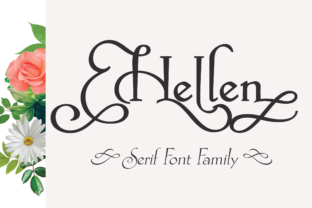
Hellen: A Timeless Serif with a Story to Tell
There’s a certain quiet confidence in a typeface that doesn’t need to shout to be heard. It draws you in with its history, its carefully crafted curves, and its ability to convey a specific mood with just a few strokes. This is the kind of presence found in Hellen, a serif font that feels less like a digital file and more like a piece of design history you can hold in your hands. Based on the 1922 Koch Antiqua by Rudolf Koch, it carries the elegance of early 20th-century craftsmanship, translated into a tool perfectly suited for today’s creative projects. Its delicate, low x-height gives it a distinctive, airy grace that sets it apart from the workhorse serifs we see everywhere else.
The Soul of a Typeface: Understanding Hellen's Character
Before you can use a font effectively, you need to understand its personality. Hellen isn’t trying to be a bold, modern headline grabber. Its strength lies in its refinement. Think of it as the well-dressed guest at a party—the one who speaks softly but commands attention through poise and substance. The low x-height means the lowercase letters have a shorter stature relative to the capitals, creating a unique, literary rhythm that feels classic and slightly nostalgic. This makes it a superb choice for projects where a sense of tradition, luxury, or thoughtful curation is key.
The included styles—regular, bold, and obliques—offer enough versatility to build a cohesive visual system. The regular weight is perfect for body text in controlled environments, like a beautifully set book chapter or a formal invitation. The bold steps in when you need emphasis without losing the font’s delicate DNA, ideal for subheadings or key phrases in a logo. The oblique styles provide a gentle slant, offering a softer alternative to true italics for adding subtle dynamism or indicating a quote. Understanding this toolkit is your first step toward unlocking its potential.
From Invitation Suites to Brand Identities: Practical Applications
So, where does a font like Hellen truly shine? Its applications are wonderfully specific, making it a secret weapon for certain projects. For anyone in the wedding or event industry, it’s a natural fit. Imagine Hellen’s elegant serifs gracing a letterpress invitation suite, the names of the couple dancing across the card with timeless sophistication. It extends naturally to all the accompanying pieces: menus, programs, place cards, and thank-you notes, creating a unified and luxurious experience for guests.
Beyond celebrations, Hellen is a powerful asset for brand identity work. It’s particularly effective for businesses that want to communicate heritage, craftsmanship, or a boutique sensibility. Picture it as the logotype for a high-end bakery specializing in classic pastries, a bespoke tailor, a fine art gallery, or a publisher of limited-edition books. In packaging design, it can elevate a product from ordinary to artisanal, especially when paired with minimalist layouts and high-quality materials. For editorial design, it brings a literary charm to magazine headlines, chapter openers, or pull quotes, adding a layer of visual storytelling.
Making It Work in the Digital Space
While its roots are in print, Hellen has plenty to offer in our screen-dominated world. The key is thoughtful implementation. On a website or blog, it’s rarely the best choice for long paragraphs of body text, where a more robust, higher x-height sans serif or serif font ensures comfortable reading. Instead, use it strategically. Set your site’s main title, blog post headings, or a special "About Us" page quote in Hellen to instantly add a touch of class and personality.
For social media graphics, it’s a standout. Think of Instagram quotes, Pinterest pins announcing a new product line, or LinkedIn carousel graphics for a consultant. Using Hellen for a key headline or a call-to-action can make a graphic feel more considered and premium, helping it stop the endless scroll. In digital products like downloadable planners, worksheets, or e-books, it can define section headers and titles, giving the digital file a tactile, designed feel that users appreciate. The goal in digital is to use its decorative strength for impact moments, not for functional reading.
Pairing and Practicality: A Designer's Checklist
Integrating a distinctive font like Hellen into a project requires a bit of finesse. Here’s a practical checklist to ensure success:
- Choose the Right Style: Match the weight and style to your purpose. Use Regular for elegant, set text. Use Bold for stronger emphasis in headlines or logos. Use the Obliques for a subtle, stylistic shift, perhaps for a tagline or a secondary element.
- Master the Font Pairing: Hellen’s decorative nature means it thrives with a clean, neutral partner. A simple geometric sans serif (like Futura, Avenir, or even a clean system font like Arial) makes an excellent companion. This contrast allows Hellen’s beauty to stand out while maintaining overall readability. Avoid pairing it with other ornate or script fonts, which can create visual chaos.
- Prioritize Readability: Always test your designs at the size they’ll be viewed. A headline in Hellen on a poster might be stunning, but the same text scaled down for a mobile screen could become hard to read. Its low x-height is a feature, not a bug, but it demands that you consider context.
- Review the Full Family: Don’t just grab the Regular. Explore all the included styles. Sometimes the Bold, used sparingly, is exactly what a layout needs to create hierarchy and visual interest.
- Understand the License: For any commercial project—from a client’s logo to merchandise you sell—ensure you have the correct commercial license. This is non-negotiable for professional work and protects both you and the font’s creator.
A Final Thought on Choosing Your Tools
Selecting a premium font is an investment in your project’s voice. Hellen isn’t a one-size-fits-all solution, and that’s precisely its value. It’s a specialized tool for designers, entrepreneurs, and creators who want to imbue their work with a specific, timeless elegance. By understanding its character, respecting its intended uses, and pairing it thoughtfully, you can leverage this classic serif typeface to create marketing assets, brand identities, and creative designs that feel both authentic and deeply resonant. It’s about finding the right voice for your story, and sometimes, that voice is a quiet one with a century of history behind it.