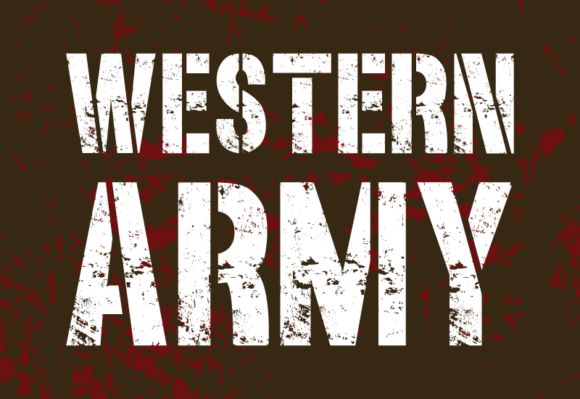
Western Army: Command Attention with Distressed Character
Imagine you are launching a tactical gear brand, or perhaps designing the visual identity for a gritty survival video game. You need typography that feels authentic, something that looks like it has seen action. Too often, fonts marketed as "military" end up looking like generic stencil sets that fail to convey the depth or atmosphere of a real narrative. This is where the Western Army typeface steps in, bridging the gap between historical grit and modern design demands. It offers a distinct voice that speaks to resilience and strategy without sacrificing readability.
The Anatomy of Audacious Design
At its core, the Western Army font is a sans-serif display typeface, but that description hardly does it justice. It is defined by its bold, unapologetic lines that carry the weight of history and conflict. The visual texture mimics the wear and tear of military equipment or the rugged terrain of a frontier landscape. This isn't a clean, sterile digital font; it is imbued with a distressed finish that adds instant character to any canvas. The slightly offbeat design moves past traditional military typography, offering a style that feels both familiar and refreshingly unique.
For designers, the appeal lies in the details. The letterforms are sturdy and commanding, yet they avoid the trap of becoming illegible block letters. Whether you are working on a logo design or a massive headline for a poster, this typeface provides a solid foundation. It embodies a sense of unyielding individuality, making it an excellent choice for brands that want to project strength and authenticity. If your project requires a premium font that stands out from the sea of minimalism, this distressed aesthetic is a powerful tool in your arsenal.
Practical Applications: Where Western Army Shines
Understanding the visual style is one thing, but applying it effectively is where the real work begins. The versatility of the Western Army typeface allows it to adapt to various mediums, provided you leverage its strengths correctly. It is particularly effective in scenarios where you need to grab attention immediately or establish a specific mood.
Here are several practical ways to integrate this font into your creative workflow:
- Branding and Identity: Use it for the primary wordmark of outdoor apparel, tactical gear, or adventure travel agencies. It instantly communicates durability.
- Packaging Design: Craft beer labels, hot sauce bottles, or rugged coffee packaging benefit immensely from the distressed texture. It suggests a handcrafted, artisanal quality.
- Social Media Graphics: In a crowded feed, clean fonts can sometimes get lost. A bold, textured headline using the Western Army font can stop the scroll and demand engagement.
- Merchandise: T-shirts, hats, and stickers often rely on typography that looks good at large scales. This typeface is built for merchandise, maintaining its impact even when printed large.
- Editorial and Web Design: While not intended for body text, it makes a striking choice for chapter headings in a magazine layout or "Hero" section titles on a website.
By matching the font's personality with the project's goals, you create a cohesive visual narrative. For example, pairing the Western Army font with a rugged background image on a landing page can significantly boost the immersive experience for the user.
Achieving Visual Consistency and Professionalism
A common mistake in modern typography is choosing a font simply because it looks "cool," without considering how it functions within a larger system. The Western Army typeface helps improve brand recognition because its distinct texture is memorable. Once a customer sees that specific style of lettering, they associate it with your brand's identity. This consistency is vital for building trust.
However, using a display font effectively requires restraint. Because the Western Army font has such a strong personality, overusing it can overwhelm a design. It is best used for headlines, subheadings, and call-to-action buttons. For body text, you need a complementary sans serif font or even a clean serif font that offers high readability. The contrast between a distressed headline and a clean body text actually helps guide the reader's eye, improving the overall professional presentation of your materials.
Consider the readability considerations at smaller sizes. While the font is legible at medium to large sizes, the distressed texture might become noisy if used for fine print. Always test your font pairings to ensure the message remains clear. A great strategy is to use the bold weight of the Western Army for impact, paired with a neutral, geometric sans-serif for supporting information.
Strategic Implementation for Maximum Impact
To get the most out of this creative font, you need to think like a strategist. Typography is not just decoration; it is a functional element of communication. When you select a typeface like Western Army, you are making a statement about the values of the project—resilience, authenticity, and boldness.
Here are a few strategic tips for implementation:
- Review Included Styles: Check if the font family includes different weights or variations (like an outline or italic). Using these variations allows for hierarchy in your design without introducing a conflicting typeface.
- Test in Context: Don't just look at the font in a white void. Place it on your actual background textures, mockups, or website headers. This ensures the distressed edges interact well with your other design assets.
- Licensing Awareness: If you are using this for a business, ensure you have the correct commercial font license. This protects your business and supports the creators who craft these high-quality tools.
- Color Psychology: This typeface pairs exceptionally well with earth tones (olive, tan, brown) or high-contrast colors (black on white, or white on deep red) to enhance the military or rugged aesthetic.
Ultimately, the goal is to use typography to solve problems. If your current branding feels weak or generic, introducing a typeface with this much character can revitalize your entire visual identity. It forces you to commit to a specific aesthetic, which often leads to more cohesive and confident design choices.
The Western Army