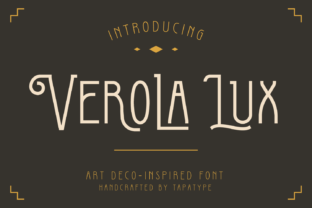
Verola Lux: Where Art Deco Geometry Meets Modern Design Needs
There's a particular feeling you get when you see a typeface that manages to feel both nostalgic and fresh at the same time. It's the kind of font that makes you stop scrolling, pause on a poster, or reconsider a brand's visual identity. That's exactly what Verola Lux brings to the table—a classic sans serif with roots in the art deco and art nouveau movements, yet with a versatility that speaks directly to contemporary design challenges.
If you've ever struggled to find a typeface that carries personality without sacrificing clarity, or one that feels vintage without looking dated, this might be the creative asset worth exploring. Let's break down what makes Verola Lux work, where it shines, and how you can use it effectively across different projects.
The Visual Character Behind the Typeface
At its core, Verola Lux is a sans serif font, but calling it that feels a bit like calling a tailored suit "just clothes." The letterforms draw clear inspiration from the geometric elegance of art deco—the kind of clean, symmetrical shapes you'd see on 1920s theater marquees and luxury product labels—while also nodding to the flowing, organic curves of art nouveau. The result is a typeface that feels structured yet approachable, refined yet not rigid.
What really sets it apart, though, is the range of stylistic alternates included. These aren't just minor tweaks; they're genuinely different takes on individual letters that can shift the entire mood of your design. Swap out a standard "A" for one with a more ornamental crossbar, or choose a "G" with a distinctive serif detail, and suddenly your headline has a completely different vibe. For designers who enjoy experimenting, this kind of flexibility is a real gift.
Where Verola Lux Actually Works in Practice
Let's talk about real-world applications, because a font's value isn't just in how it looks on a specimen sheet—it's in how it performs across the projects you actually work on.
Branding and Logo Design: If you're building a brand identity for a boutique hotel, a craft cocktail bar, a vintage-inspired clothing line, or even a high-end bakery, Verola Lux offers that sweet spot between distinctive and legible. It gives logos a sense of heritage and craftsmanship without veering into costume territory. The alternates are especially useful here—you can create a custom-feeling wordmark by selecting letter variations that no other brand will have.
Packaging Design: This is where the art deco influence really comes alive. Think about product labels on specialty foods, artisan spirits, cosmetics, or candles. Verola Lux's geometric precision reads well at small sizes on packaging, while its stylistic options let you add flair to the product name or headline without cluttering the overall layout.
Posters and Print Materials: Vintage-inspired event posters, gallery announcements, music festival graphics, or theater programs—these are natural homes for a font like this. The wide letterforms and balanced proportions give headlines real presence, and the art nouveau undertones add a layer of visual interest that flat, modern sans serifs often lack.
Social Media Graphics: On platforms where you have roughly two seconds to grab attention, a distinctive display font can make the difference between a post that gets noticed and one that blends into the feed. Verola Lux works particularly well for quote graphics, promotional announcements, and branded templates where the typography itself becomes part of the visual identity.
Websites and Digital Products: While you probably wouldn't set an entire blog in Verola Lux (it's a display font, after all), using it for hero sections, page headers, and call-to-action headlines can give a website a strong visual anchor. Pair it with a clean, highly readable body font, and you've got a typographic system that feels cohesive and intentional.
Invitations and Editorial Layouts: Wedding invitations, event programs, magazine covers, lookbooks—the font's elegant proportions and alternate characters make it a strong choice for any project where you want typography to feel like a design feature, not just a utility.
Making Typography Work for Your Brand
Choosing the right font is less about following trends and more about alignment. Does the typeface match the personality of the brand or project? Does it communicate the right emotional tone? Will it hold up across the different contexts where you need to use it?
Verola Lux tends to work best for projects that want to convey a sense of craftsmanship, sophistication, or retro-inspired confidence. It's not the right choice for a tech startup trying to look ultra-minimal, but it's perfect for a brand that wants to feel established, curated, or design-conscious. The key is to let the font do what it does well—serve as a headline or display face that sets the tone—without forcing it into roles it wasn't designed for.
A few practical tips for working with this typeface:
- Test your alternates before committing. Open up the glyph panel in your design software and explore the stylistic options. Sometimes the default letterforms are perfect; other times, swapping one or two characters transforms the entire composition.
- Pair it thoughtfully. Verola Lux's decorative qualities mean it pairs best with simpler body fonts. A clean geometric sans serif or a classic serif for body text will let the display font shine without competing for attention.
- Consider your size and spacing. Display fonts often need more generous letter-spacing than you'd expect, especially at larger sizes. Don't be afraid to adjust tracking to let the letterforms breathe.
- Check readability at actual use size. What looks gorgeous at 72pt on your monitor might lose clarity at 14pt on a printed label. Always test the font at the size your audience will actually see it.
Understanding What You're Getting
When investing in a premium font like Verola Lux, it's worth reviewing exactly what's included. Typically, a well-constructed display typeface will come with multiple weights or styles, a full set of alternates, standard punctuation and numerals, and multilingual character support. Check whether the licensing covers the ways you plan to use it—commercial projects, client work, merchandise, digital products—and whether the terms allow for the scale of your intended use.
Good typography is one of those design investments that pays dividends across every touchpoint. A single well-chosen typeface can unify a brand's visual presence from its website to its packaging to its social media, creating the kind of consistency that builds recognition over time. When your audience starts associating a particular style of lettering with your brand, you've achieved something that no amount of generic design can replicate.
Verola Lux isn't trying to be everything to everyone. It's a display font with a clear point of view—rooted in early 20th-century design movements, built with modern functionality, and equipped with enough stylistic range to keep your projects feeling fresh. If that matches what you're looking for, it's the kind of design asset that earns its place in your toolkit quickly.