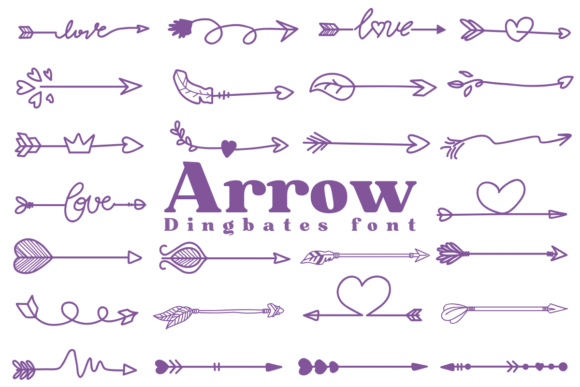
Arrow: The Secret Code Font for Modern Design
Imagine you're sketching a map on a whiteboard, and instead of writing "turn left here," you simply draw a sleek arrow. That instant, universal understanding is exactly what the Arrow typeface brings to your digital toolkit. It’s not just a collection of letters; it’s a visual language where every character is a directional cue, transforming standard text into a dynamic guide for the eye.
A Typeface with Built-In Direction
What makes this particular design asset so captivating is its inherent ability to guide movement. In a world saturated with static text, Arrow offers a kinetic energy that standard serif or sans serif fonts simply can't replicate. It functions almost like a secret code—once you understand the system, the text becomes a puzzle of shapes and angles. This is particularly useful for modern typography where breaking the mold is often the goal. It captures the essence of wayfinding and navigation, making it an ideal choice for projects that require a sense of progress or forward momentum.
Injecting Energy into Brand Identity
For small business owners and entrepreneurs, brand recognition is the holy grail. While a clean sans serif font is safe, it rarely stands out in a crowded marketplace. Integrating Arrow into your visual strategy can solve this problem by acting as a distinct signature. Consider using it for your wordmark or logo design; the unique silhouette of the letters ensures that your brand name is memorable the moment someone sees it.
This typeface works exceptionally well for brands that want to convey action, speed, or innovation. Think about a logistics company, a fitness brand, or a tech startup. By utilizing Arrow, you aren't just spelling out your name; you are visually communicating your company's velocity and direction. It serves as a premium font choice that adds a layer of conceptual depth to your brand identity without needing complex graphics or illustrations.
Practical Applications for Visual Communication
The versatility of this creative font extends far beyond just logos. Its strength lies in its ability to act as a visual accent in various design assets. Because it is a display font, it shines brightest when used for headlines, call-to-action buttons, or decorative elements rather than long blocks of body text.
Here are several ways to leverage Arrow in your next project:
- Social Media Graphics: Use Arrow to create "swipe up" cues or to highlight key statistics in an Instagram story. The distinct shape cuts through the noise of a busy feed, grabbing attention instantly.
- Packaging Design: If you are designing packaging for a product that requires assembly or specific usage instructions, this font can make the steps intuitive. It turns boring instructions into an engaging visual game.
- Website Headers: In web design, user experience is paramount. Using Arrow for section headers or navigation cues can subconsciously guide users down the page, improving engagement and reducing bounce rates.
- Merchandise and Apparel: The graphic nature of the letters makes it perfect for t-shirts, tote bags, and hats. It creates a cool, cryptic aesthetic that appeals to a younger demographic or those interested in streetwear style.
- Editorial Layouts: Magazines and blogs can use Arrow to create dynamic pull quotes or to separate sections. It breaks up the monotony of traditional column layouts.
Pairing and Readability Considerations
One of the most common questions designers have when working with a specialized typeface is, "What do I pair it with?" Because Arrow is so geometric and abstract, it demands a grounding partner. You generally want to avoid pairing it with other highly stylized fonts like a complex script font or an ornate handwritten font, as this can lead to visual clutter.
Instead, look for a simple, clean companion. A modern, geometric sans serif font works beautifully to provide the necessary context for the Arrow text. For example, you might use a light-weight sans serif for your body copy to explain what the Arrow headline is implying. If you are going for a more editorial design vibe, a classic serif font can offer a sophisticated contrast to the sharp, angular nature of the arrows.
When it comes to readability, context is king. Since Arrow replaces letters with symbols, it is best used for single words, short phrases, or standalone symbols where the "text" is secondary to the visual impact. If you try to write a full paragraph in Arrow, it becomes difficult to decipher. However, when used as a headline or a logo element, the lack of traditional legibility becomes a feature, not a bug—it forces the viewer to look closer and engage with the design.
Commercial Use and Licensing
For designers and agencies working with clients, understanding the licensing of a commercial font is non-negotiable. When selecting a premium font like Arrow, you are paying for the legal right to use that design in commercial projects. This is crucial for logo design and packaging, where the font becomes part of a trademarked identity.
Before finalizing a project, always verify the specific license terms. Does the license cover digital products? Can the font be embedded in an app? Is it cleared for unlimited print runs? A high-quality typeface usually comes with clear licensing that protects both the creator and the user, ensuring that your brand assets are built on solid legal ground.
Final Thoughts on Creative Typography
Typography is often the silent workhorse of design, but with a typeface like Arrow, it steps into the spotlight. It challenges the conventional rules of legibility to offer something more visceral: a feeling of direction and purpose. Whether you are a crafter looking to spice up a scrapbook, a marketer designing a high-converting landing page, or a designer crafting a bold new brand identity, Arrow provides a unique toolset. It reminds us that text isn't just for reading—it's for seeing, feeling, and navigating. By embracing this secret code of arrows, you add a layer of intrigue and professionalism that standard text simply cannot achieve.