Bunda: Crafting a Story with a Stacked, Nature-Inspired Font
Every design has a voice, and it speaks before a single word is read. The choice of typeface sets the tone, whispers a mood, and tells a story. For projects that need to feel grounded, organic, and full of character, the search for the right letterforms can be a journey. You’re looking for something that feels handmade yet polished, natural yet structured. This is where a typeface like Bunda enters the conversation. It’s more than just a collection of letters; it’s a design tool built to bring a specific, earthy personality to your creative work, especially when you need that bold, impactful presence only a display font can offer.
The Organic Character of a Stacked Display Typeface
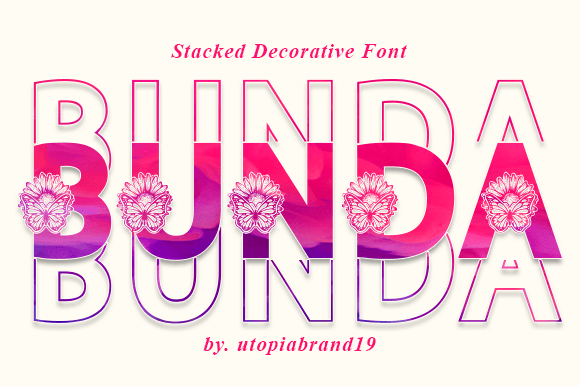
What immediately draws the eye to Bunda is its unique stacked composition. Unlike traditional fonts where letters sit side-by-side on a single baseline, this style arranges characters in a compact, vertical block. This creates an instant focal point, perfect for headlines, logos, and any application where you need to command attention without a sprawling layout. It’s a design choice that feels both modern and reminiscent of vintage woodblock prints or hand-carved stamps.
The "nature style" is woven into its visual DNA. The letterforms often feature subtle imperfections, organic curves, or slightly irregular edges that mimic the feel of natural materials or handcrafted elements. It avoids the sterile perfection of geometric sans serifs, instead offering a warmth and texture that feels authentic. This makes it an exceptionally versatile creative font for projects aiming to connect with audiences on a human level. Think of it as the typographic equivalent of using recycled paper or a hand-drawn illustration—it adds a layer of sincerity and tactile appeal.
From Brand Identity to Tangible Products
The true test of any design asset is its real-world application. A font can look beautiful in a specimen sheet but fail to deliver in context. Bunda, with its bold personality, shines in specific scenarios where its character can truly enhance the message.
Building a Memorable Brand Identity: For small businesses, especially those in the artisan, wellness, outdoor, or eco-friendly space, brand recognition is built on consistent, authentic visuals. Using Bunda for your primary logo or wordmark instantly communicates a brand philosophy rooted in nature, craftsmanship, and quality. It works beautifully for a boutique coffee roaster, a handmade soap company, a hiking gear brand, or a farm-to-table restaurant. The font does the heavy lifting of establishing your brand’s core personality from the first glance.
Designing Packaging That Sells: On a crowded shelf, packaging has seconds to tell its story. A display font like Bunda is ideal for the main product name on labels, boxes, and bags. Its stacked format is particularly effective for vertical spaces, like the spine of a coffee bag or the side of a candle jar. Paired with a clean, legible sans serif for descriptive text, it creates a hierarchy that is both visually striking and easy to navigate.
Creating High-Impact Marketing Materials: In the fast-scrolling world of social media, a bold typographic statement can stop a thumb. Use Bunda for the central quote in an Instagram post, the headline on a promotional flyer, or the title card in a short video. Its unique structure is inherently eye-catching. For print materials like posters for a local market or event, it provides a strong visual anchor that can be read from a distance.
Merchandise with Soul: This is where the font truly comes alive. Imagine it on a t-shirt featuring an inspiring quote about adventure or mindfulness. Picture it on a mug for a morning coffee ritual, on stickers for laptops and water bottles, or on sublimation designs for custom products. The nature-inspired, handcrafted feel of the typeface translates perfectly to merchandise, giving it a premium, boutique quality that generic fonts cannot match. It turns everyday items into extensions of a brand’s story.
Pairing and Practicality: Making the Font Work for You
A powerful display font needs thoughtful companions to create a balanced and functional design system. The key is contrast. Since Bunda brings a lot of personality and visual texture, it pairs best with simpler, more neutral typefaces.
For Body Copy and Readability: Always pair a display font like this with a highly legible serif or sans serif for longer blocks of text. A clean sans serif (think Open Sans, Lato, or Montserrat) provides a modern, airy counterpoint. A classic serif (like Merriweather or Lora) can add a touch of timeless elegance. The goal is to let Bunda command the headlines while the supporting font ensures your paragraphs, descriptions, and calls-to-action are effortlessly readable.
Testing is Non-Negotiable: Before finalizing a design, always test your font pairing in context. View it on both a large desktop screen and a small mobile device. Print a test copy if it’s for a physical product. Check the kerning (the space between specific letter pairs) in your stacked headline—sometimes manual adjustment is needed to achieve perfect visual balance. Ensure the contrast between your headline and body text is sufficient for clear hierarchy.
Understanding the Included Styles: A quality premium font often comes with more than just the basic uppercase and lowercase. Explore the full character set. You might find useful alternates, ligatures (special connected letter pairs), or stylistic sets that offer slight variations on the letterforms. These extras can be invaluable for customizing a logo or creating a unique monogram, allowing you to fine-tune the font’s personality for your specific brand.
A Tool for Visual Storytelling
Choosing a typeface is a strategic decision in visual communication. It’s not about what’s trendy, but what best serves the story you need to tell. Bunda offers a distinct voice for projects that value authenticity, a connection to the natural world, and a handcrafted aesthetic. Its strength lies in its ability to be both a bold visual statement and a carrier of subtle, organic warmth. When used thoughtfully—in the right context, with the right partners, and for the right audience—it becomes more than just a font. It becomes a fundamental part of your design’s narrative, helping to build recognition, engage your audience, and present your work with a clear, professional, and deeply personal visual identity. The most effective design assets are those that solve a problem and tell a story, and this stacked decorative typeface is built precisely for that purpose.