Hustle Culture: Where Grit Meets Graphic Design
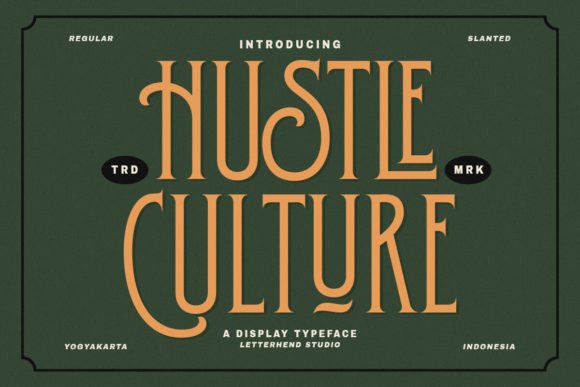
There is a specific energy in the air right now, a feeling that permeates coffee shops, co-working spaces, and creative studios. It is the drive to build something from nothing, the late nights sketching out business plans, and the early mornings perfecting a brand. This is the "hustle," but to capture that raw, ambitious spirit visually, you need a typeface that speaks the language of modern entrepreneurship without losing its cool. Enter our latest display typeface, simply named Hustle Culture. It is a unique monoline serif that bridges the gap between traditional reliability and contemporary flair. If you are looking for a font that feels grounded yet dynamic, clean yet ornate, this might be the missing piece in your creative toolkit.
Beyond the Standard Serif: A Closer Look at the Aesthetic
When we talk about typography in branding, we are often choosing between the classic authority of a serif and the clean minimalism of a sans-serif. Hustle Culture disrupts that binary. At its core, it is a monoline serif, meaning the strokes have a consistent thickness that gives it a modern, technical feel. However, it refuses to be boring. The magic lies in the details: the "swirl swashes" and alternates that come included with the font. These aren't just decorative add-ons; they are essential tools for storytelling. The combination of the clean, neat structure of a serif with those fluid, swirling details allows you to create logotypes and lettering that feel bespoke and hand-crafted, yet perfectly polished.
Think about the visual representation of "hustle." It isn't rigid. It is fluid, adapting, and constantly moving. The alternate characters in this typeface allow you to swap out standard letters for versions with sweeping tails and elegant loops. This means two designers using the same font can end up with completely different logos. For a small business owner or a graphic designer, this versatility is gold. It allows you to create a visual identity that stands out in a crowded market without needing to commission expensive custom lettering.
Practical Applications: From Packaging to Pixels
A font is only as good as its application. While Hustle Culture is a display typeface—meaning it shines brightest at larger sizes—its utility spans a massive range of projects. If you are a creative entrepreneur, here is how this font can solve real-world design problems.
Logo Design and Brand Identity: This is the font’s home turf. The monoline structure ensures the logo looks professional and scalable, while the swashes provide that unique "hook" needed for brand recognition. It works exceptionally well for lifestyle brands, boutique agencies, coffee roasters, fashion labels, and tech startups that want to appear approachable rather than corporate.
Packaging Design: In the world of e-commerce and retail, packaging is your silent salesperson. Using Hustle Culture on a box, a jar, or a label immediately signals quality. The serifs provide a classic touch that suggests heritage and trustworthiness, while the modern monoline weight keeps it looking fresh. Imagine a matte black coffee bag with "Artisan Roast" printed in this font with a swash on the 'R'—instant shelf appeal.
Digital Products and Web Design: While body text should generally be reserved for highly legible sans-serifs or traditional web-safe fonts, your headers and hero sections need personality. This font is perfect for website headers, blog post titles, and landing page banners. It grabs attention immediately. For digital creators selling courses, templates, or presets, using this typeface on your mockups and sales pages can elevate the perceived value of your product.
Social Media Graphics and Marketing Assets: In the fast-scrolling environment of Instagram, TikTok, or Pinterest, typography stops the thumb. The unique silhouette of Hustle Culture is recognizable. Whether you are creating quote graphics, announcement posts, or story highlights, the font adds a layer of professionalism that stock fonts simply cannot match. It helps in building a consistent visual grid that followers can recognize instantly.
Bridging the Gap: Professionalism and Personality
One of the hardest balancing acts in design is looking professional without looking sterile. Many businesses default to safe, standard fonts to avoid mistakes, but this often leads to blending in rather than standing out. Hustle Culture solves this dilemma. Because it is fundamentally a serif, it carries the weight of tradition and seriousness. You wouldn't hesitate to use it for a law firm's rebrand or a financial consultant's website. However, the added swirls and alternates inject a dose of creativity and personality.
This duality makes it an excellent choice for "solopreneurs" and freelancers. You need to show that you are serious about your business (hence the serif structure) but that you are also a creative thinker who brings fresh ideas to the table (hence the swashes). It visually communicates that you are reliable yet innovative.
Mastering the Mix: Pairing and Readability
Introducing a strong display font into your design system requires some thought regarding hierarchy and pairing. You cannot simply use Hustle Culture for everything, or you risk visual clutter. Here is some practical advice on integrating it effectively.
Pairing with Simplicity: Because this font has a lot of character, it pairs best with something quiet and neutral. A geometric sans-serif or a clean humanist font works beautifully for body text. Let Hustle Culture do the heavy lifting for headlines, and let your secondary font handle the paragraphs. This contrast creates a dynamic visual rhythm.
Readability Considerations: As a display font, this is not intended for long-form reading at small sizes. The swashes and alternate characters that make it beautiful at 48pt might become muddy at 10pt. Always use it for short bursts of text: titles, headers, logos, and pull quotes. When using the swashes, ensure they don't collide with surrounding elements in a way that obscures the letterforms.
Testing Your Pairings: Before finalizing a design, test how the font looks on different backgrounds. The monoline weight holds up well on both light and dark modes, but the swashes need breathing room. Avoid placing the text over busy photography unless you add a background layer or shadow to separate the type from the image.
The Business of Typography: Licensing and Assets
If you are using fonts for client work or selling products, the boring stuff matters: licensing. Hustle Culture is a premium font asset, and like all professional design tools, it comes with specific usage rights. Whether you are a designer handing off files to a client, or a business owner putting the font on your merchandise, understanding the license is crucial.
Most commercial licenses cover desktop installation for creating logos, print materials, and static images. However, if you plan to embed the font in a mobile app or use it extensively in web design via @font-face, you should verify that your license covers web and app usage. Treating typography as a professional asset means respecting the intellectual property of the creators, ensuring you can use the font confidently in your commercial projects without legal headaches.
Ultimately, the tools we choose define the work we produce. In a visual economy where first impressions are made in milliseconds, choosing a typeface like Hustle Culture is an investment in clarity and character. It allows you to articulate the grit of the hustle with the grace of good design, ensuring your next project doesn't just communicate a message, but leaves a mark.