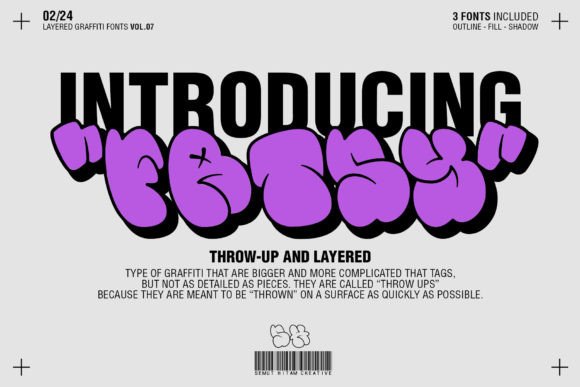
Fatsy: The Graffiti Font That Brings Street Art Energy to Your Designs
There's a moment when a design needs more than just clean lines and safe choices. It needs attitude. It needs the kind of visual punch that stops someone mid-scroll, makes them lean in, and demands attention without asking permission. That's exactly the space Fatsy occupies—a graffiti-inspired typeface that channels the raw, unapologetic energy of bubble-letter street art into a tool you can actually use for real projects.
If you've ever admired the thick, puffy outlines of classic graffiti pieces and wondered how to capture that spirit in a digital format, Fatsy answers that question with confidence. This isn't a watered-down interpretation of street art aesthetics. It's a bold, fully realized display font that respects where it came from while giving designers, creators, and business owners something genuinely versatile to work with.
What Makes Fatsy Visually Distinctive
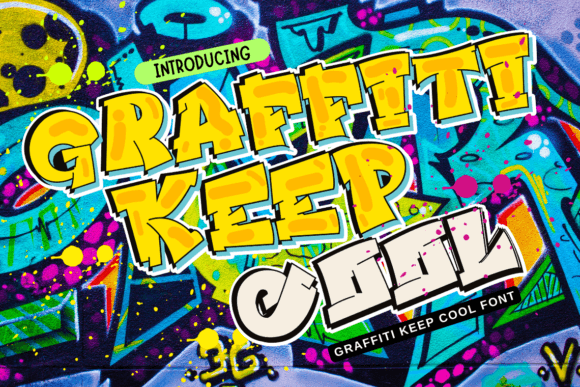
At its core, Fatsy draws from the puffiness of bubble letters—the rounded, inflated letterforms that have been a staple of graffiti culture for decades. But rather than simply mimicking that style, the font builds on it. The thick outlines give each character a full-bodied, almost three-dimensional quality. Letters feel like they're pressing forward off the screen, demanding to be seen.
What really sets this creative font apart is its layered design. Each character is built with distinct layers—typically an inner fill and an outer outline—that can be stacked, colored independently, and adjusted to create depth without requiring complex editing software or advanced design skills. For anyone who's spent hours trying to manually add outlines and shadows to text, this feature alone is a significant time-saver.
The result is a typeface that feels alive. It has movement, weight, and personality baked into every glyph. And because the letterforms are inherently bold, they hold their own even at smaller sizes or when paired with more restrained sans serif fonts or serif fonts in a layout.
Where Fatsy Actually Works in Real Projects
Let's get practical. A font can look incredible in a specimen sheet but fall flat in the real world. Fatsy, however, translates well across a surprisingly wide range of applications—and that's worth exploring in detail.
Branding and Logo Design: If your brand identity leans toward youthful, energetic, urban, or counter-culture aesthetics, Fatsy can serve as the foundation of a memorable logo. Think streetwear labels, skate shops, music festivals, independent record stores, or any brand that wants to signal authenticity and edge. The font's thick outlines ensure legibility at various sizes, from a favicon to a storefront sign.
Packaging Design: Food and beverage brands targeting younger demographics—energy drinks, craft beer, artisan snacks—can use Fatsy to create shelf presence. The font's visual weight makes product names pop, especially when layered with contrasting colors on the inner and outline fills.
Social Media Graphics: Instagram stories, TikTok thumbnails, YouTube banners, and Pinterest pins all demand text that reads instantly at a glance. Fatsy's bold character shapes are built for exactly this. A single word in Fatsy can anchor an entire social media post, especially when combined with photography or illustration.
Posters and Event Materials: Concert flyers, festival promotions, gallery openings, community events—anywhere you need to communicate excitement and energy quickly. The font practically vibrates with movement, making it ideal for designs that need to generate buzz.
Merchandise: T-shirts, hoodies, hats, stickers, and tote bags all benefit from typefaces that look good standing alone. Fatsy's graffiti roots make it a natural fit for merch that people actually want to wear and carry.
Invitations and Editorial Layouts: This might seem like an unusual pairing, but consider a birthday party invitation for a teenager, a music magazine spread, or a zine-style editorial project. Fatsy brings a handmade, rebellious quality that formal script fonts or handwritten fonts simply can't replicate.
Websites and Blogs: Used sparingly as a headline or accent font, Fatsy can inject personality into an otherwise minimal web design. Pair it with a clean sans serif font for body text, and you get a layout that feels dynamic without sacrificing readability.
Marketing Assets and Digital Products: Email headers, lead magnet covers, course branding, podcast artwork, and promotional banners all benefit from a typeface that commands attention in crowded digital spaces.
Pairing Fatsy With Other Fonts
One of the most practical strengths of this premium font is how well it plays with others. Because Fatsy is unapologetically bold, it creates natural contrast when paired with more understated typefaces. That contrast is the foundation of effective font pairing.
Try combining Fatsy with a geometric sans serif font like Montserrat or Poppins for body copy. The clean, neutral letterforms of those families let Fatsy's personality shine without competing for attention. Alternatively, pairing it with a simple serif font can create an unexpected tension between street culture and editorial sophistication—particularly effective for magazine-style layouts or brand identities that blend high and low culture.
A few practical pairing tips:
- Limit yourself to two or three fonts maximum. Fatsy plus one body font is usually enough. Adding a third should be intentional, not accidental.
- Let Fatsy dominate headlines. Its visual weight naturally draws the eye, so use it where you want readers to look first.
- Use generous spacing around Fatsy text. Bold, layered fonts need breathing room. Crowding them with other elements undermines their impact.
- Test pairings at actual sizes. What looks balanced on a large monitor might feel overwhelming on a phone screen. Always preview in context.
Readability and Practical Considerations
Bold display fonts carry an inherent trade-off: maximum visual impact versus sustained readability. Fatsy handles this balance well for its category, but it's important to use it thoughtfully.
For headlines, logos, and short bursts of text—five to ten words—Fatsy is highly effective. The letterforms are distinct enough that individual characters remain recognizable even with the layered, graffiti-inspired styling. For longer passages, body text, or fine print, you'll want to switch to a more conventional typeface. That's not a limitation; it's how display fonts are designed to function.
Color choices also matter significantly with a layered font. Because Fatsy includes separate fill and outline layers, you have the opportunity to create high-contrast color combinations that enhance legibility. Dark outlines with lighter fills tend to work best, but experimenting with complementary or analogous color schemes can yield striking results. Just avoid pairing colors with similar values—light gray on white, for instance—as the layers can blur together and lose definition.
Before committing to Fatsy for a project, test it across the specific contexts where it will appear. Print a sample on the actual paper stock you'll use. Preview it on the exact social media platform where it'll be posted. Check how the layers render on different screens and devices. These small steps prevent surprises down the line.
Understanding What's Included
Fatsy ships with a comprehensive character set that covers far more than just basic Latin letters. You'll find uppercase and lowercase characters, numbers, punctuation marks, and support for multiple languages. This breadth matters more than you might initially think.
If you're creating content for an international audience—or even just need to include accented characters for a single word in French, Spanish, or Portuguese—the multilingual support ensures visual consistency across your entire design. There's nothing worse than mixing a display font with a fallback typeface for a handful of accented characters. The visual mismatch is immediately noticeable and undermines the professionalism of the work.
The included punctuation and number set also makes Fatsy more practical for real-world use than many display fonts, which sometimes treat these characters as afterthoughts. Whether you're designing a price tag, a date on a poster, or a numbered list in a social media graphic, the full character range keeps everything cohesive.
Licensing and Commercial Use
If you're planning to use Fatsy for commercial projects—and given its versatility, many of you will—it's worth reviewing the licensing terms carefully before purchasing. Most commercial fonts come with specific conditions regarding the number of users, permitted use cases (print, digital, merchandise), and whether the font can be embedded in digital products like apps or e-books.
For small business owners and freelancers, a standard desktop license typically covers most needs: logos, printed materials, social media graphics, and client work. If you're a larger agency or need to distribute the font files to multiple team members, an extended or multi-user license may be required. Always check the specific terms provided with your purchase to avoid complications later.
This isn't just about legal compliance—it's about respecting the work of the type designers who created the font. Quality design assets take significant skill and time to develop, and fair licensing supports the continued creation of tools that elevate our collective work.
Making the Most of a Bold Choice
Choosing a font like Fatsy is a deliberate creative decision. It signals that a brand or project isn't interested in blending in. It's for the streetwear startup that wants to stand out at a trade show. The independent coffee roaster whose packaging needs to compete on a crowded shelf. The content creator whose thumbnails need to cut through an endless feed. The event organizer whose poster needs to stop foot traffic.
The key is matching the font's personality to the project's goals. Fatsy won't be the right fit for a law firm's letterhead or a luxury spa's menu—and that's perfectly fine. No single typeface works for every context. But when the brief calls for energy, confidence, and a touch of rebellious charm, few options deliver as reliably as this one.
Take the time to explore the full character set, experiment with the layering options, and test it against your existing font pairing choices. You might be surprised at how a single typeface shift can transform the entire feel of a design—from forgettable to unmistakable.